
Umbraco Is Becoming an Agent-Ready CMS
Published: 29 April 2026
Introduction
Modern CMS platforms are evolving far beyond traditional publishing systems. With Umbraco’s one of the well-known CMS shifts toward an agent-ready architecture, organizations operating within .NET and Azure ecosystems now have a strong foundation for building AI-assisted digital experience platforms.
The role of a Content Management System (CMS) is changing rapidly.
Before, CMS platforms served primarily as repositories for managing and publishing content. Now, digital experience platforms are entering a new phase, where automation pipelines and intelligent agents participate alongside developers and editors in delivering modern digital experiences.
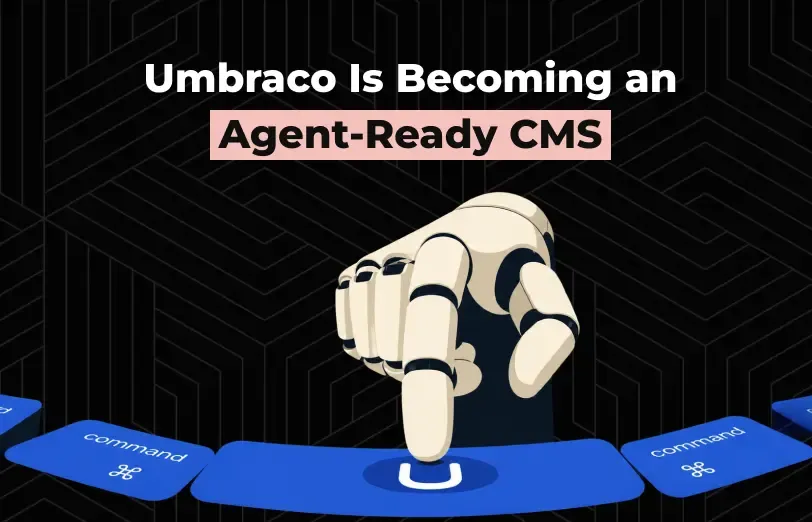
Umbraco’s recent direction toward becoming an Agent-Ready CMS, signals a meaningful architectural shift. This is not just a product improvement, rather it represents the future of how modern CMS platforms will operate inside AI-enabled digital ecosystems.
From Content Repository to Digital Experience Orchestration Layer
Modern CMS platforms are no longer designed only for human interaction. Although, they are increasingly supporting collaboration between:
- Content editors
- Developers
- Automation pipelines
- Intelligent implementation agents
This shift transforms CMS platforms from publishing tools into orchestration layers that support structured delivery across multiple digital touchpoints. Umbraco is steadily aligning with this transformation through its structured content modelling approach and API-first delivery capabilities. Let’s understand what Agent-ready CMS means in the following paragraph.
What Does Agent-Ready CMS Actually Mean?
An Agent-Ready CMS allows intelligent systems to interact with content structures, workflows, and delivery pipelines in predictable and automation-friendly ways and enables the following:
- Machine-readable content modeling
- Automation-assisted implementation workflows
- Structured schema-driven delivery
- API-based orchestration support
- Scalable integration with composable platforms
Instead of acting as a static repository, the CMS becomes a dynamic participant in the digital experience lifecycle. This is the foundation required for AI-augmented platform architecture. Not this only, let’s discuss further parameters in the following section.
Why Structured Content Is the Foundation of AI-Driven Platforms
AI systems rely on structured, consistent, and predictable data inputs. Composable CMS platforms like Umbraco naturally support this requirement through the following:
- Document-type based modeling
- Schema-driven content architecture
- Headless delivery support
- API-first integration readiness
Organizations investing in structured content strategies today and are preparing their platforms for intelligent automation tomorrow. Structured content is no longer optional. It is becoming essential infrastructure for modern digital platforms.
Implementation Workflows Are Changing
Traditional CMS workflows followed a predictable lifecycle:
Design → Build → Publish
Agent-ready platforms introduce a new implementation model:
- Design → Structure → Automate → Orchestrate → Adapt
This evolution enables organizations to:
- Accelerate delivery timelines
- Improve implementation scalability
- Support automation-assisted deployments
- Enable reusable content systems.
- Increase developer productivity
As implementation agents mature, these workflows will become standard across enterprise digital ecosystems.
Why This Matters for .NET and Azure-Native Organizations
Organizations already working within Microsoft ecosystems are especially well-positioned to benefit from Umbraco’s evolution.
This includes teams leveraging:
- .NET-based architectures
- Azure-native infrastructure
- Headless CMS delivery
- API-first integration strategies
- Composable digital platforms
Umbraco’s lightweight and extensible architecture makes it a strong foundation for building AI-augmented enterprise experience platforms without introducing unnecessary system complexity. For many organizations, it represents a practical path toward future-ready CMS architecture. It is crucial to maintain the natural alignment among the ShapeCMS and AI platforms.
Alignment Between Composable CMS and AI Platforms
Composable architecture and AI platforms share several core principles. Both depend heavily on structured interoperability. Let’s understand the details with the help of this given table.
| Structured content models | Machine-readable inputs |
| API-first delivery | Agent accessibility |
| Modular architecture | Automation flexibility |
| Schema-driven systems | Predictable orchestration |
Because of this alignment, composable CMS platforms like Umbraco are becoming increasingly important building blocks for intelligent digital ecosystems.
Where Addact Sees the CMS Landscape Heading
At Addact, we are closely observing how modern CMS platforms such as Umbraco and Sitecore are evolving toward agent-ready architecture patterns. Enterprise platforms are moving toward environments where:
- Developers create composable foundations.
- Editors manage structured experiences.
- Automation pipelines accelerate delivery.
- Intelligent agents assist implementation workflows.
This represents the next stage in the evolution of the CMS platform. Organizations that prepare today will be better positioned to deliver scalable, AI-enabled digital experiences tomorrow.
Final Thoughts
Umbraco’s movement toward Agent-Ready CMS architecture reflects a broader transformation happening across the digital experience ecosystem. CMS platforms are no longer just publishing systems.
They are becoming intelligent orchestration layers supporting structured delivery, automation pipelines, and AI-assisted implementation workflows. For organizations building on .NET and Azure-native platforms, this shift opens the door to a new generation of scalable and intelligent digital architectures.
This transformation is only getting started. Let’s connect to discuss and explore potential opportunities.
FAQ Section
What is an Agent-Ready CMS?
An Agent-Ready CMS is a platform designed to support AI systems, automation tools, and intelligent workflows through structured content and APIs.
Why is Umbraco suited for AI-ready platforms?
Umbraco offers structured content models, extensible APIs, headless delivery, and strong .NET/Azure compatibility.
Is Umbraco good for enterprise organizations?
Yes. Umbraco is well-suited for enterprises seeking scalable, flexible, and composable digital experience platforms.
CTA
Looking to build an AI-ready Umbraco platform?
Addact helps enterprises implement scalable CMS solutions across .NET, Azure, and modern composable architectures

Ashutosh Kachot – Vice President
Digital Experience Platforms | Composable Architecture | Healthcare Technology Strategy
Vice President at Addact Technologies, leading enterprise CMS, composable architecture, and React engineering initiatives for global digital experience platforms. With 18+ years of experience across healthcare and enterprise transformation programs, he focuses on helping organizations modernize structured content ecosystems and scale digital delivery platforms effectively.