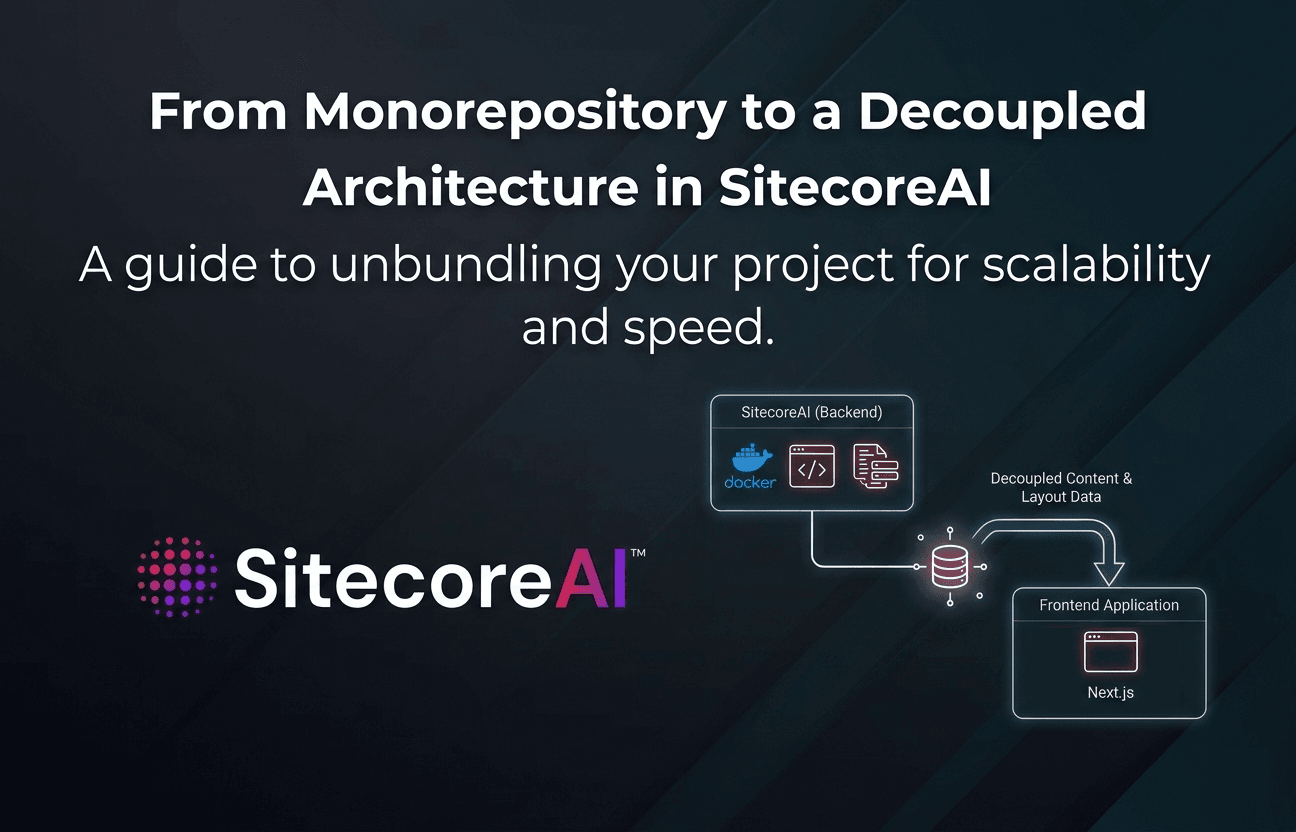
Introduction
Most SitecoreAI Cloud projects don’t begin with architecture diagrams or long-term plans. They begin with urgency - launch dates, limited teams, and the need to get something working quickly. In that context, a monorepository often feels like the most practical choice. Everything lives together. Content models, front-end code, serialization, pipelines - all in one place. Early on, this works well.
But as the project grows, the same structure that once helped starts slowing things down. Front-end teams wait for CMS deployments. Content changes get tangled with UI updates. Releases become heavier.
This is where many teams begin exploring a decoupled approach. With SitecoreAI Cloud, that shift is not only possible - it’s expected. This article walks through how teams typically move from a monorepository to a decoupled setup, what changes along the way, and how SitecoreAI Cloud supports this transition in real projects.
The Reality of a Monorepository in SitecoreAI
In a typical SitecoreAI monorepository, everything related to the site is versioned and deployed together. That usually includes templates, renderings, serialized items, and a front-end application built with Next.js or React.
At the start, this feels efficient. Developers can trace a page from content to UI in one place. New team members onboard quickly. Local development is predictable.
The challenges don’t appear immediately. They surface gradually.
A small styling change triggers a full pipeline. A front-end-only release waits because a content schema change is still being tested. Multiple teams touch the same files and run into merge conflicts. Over time, teams become cautious about deploying - even when the change itself is small.
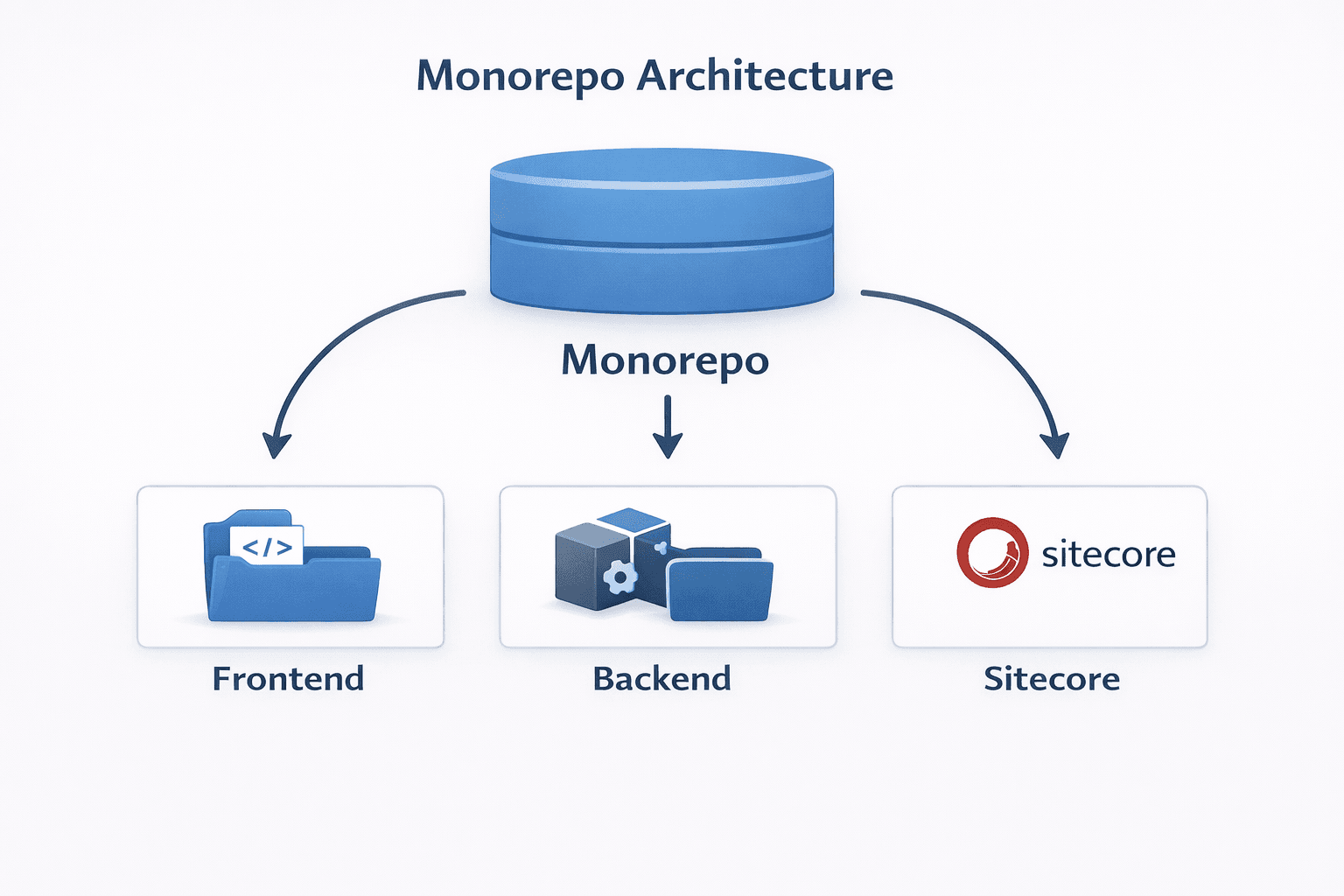
The issue isn’t that monorepos are wrong. The issue is that they don’t scale well once teams, responsibilities, and release frequency increase.
What “Decoupled” Actually Means in SitecoreAI
Decoupling doesn’t mean removing Sitecore from the picture. In a decoupled SitecoreAI setup, Sitecore remains the source of truth for content and page structure. Editors still compose pages. Templates and layouts still live in SitecoreAI. Personalization rules still apply.
What changes is where rendering logic lives.
The front-end application becomes its own system. It consumes content through APIs and focuses entirely on user experience, performance, and presentation.
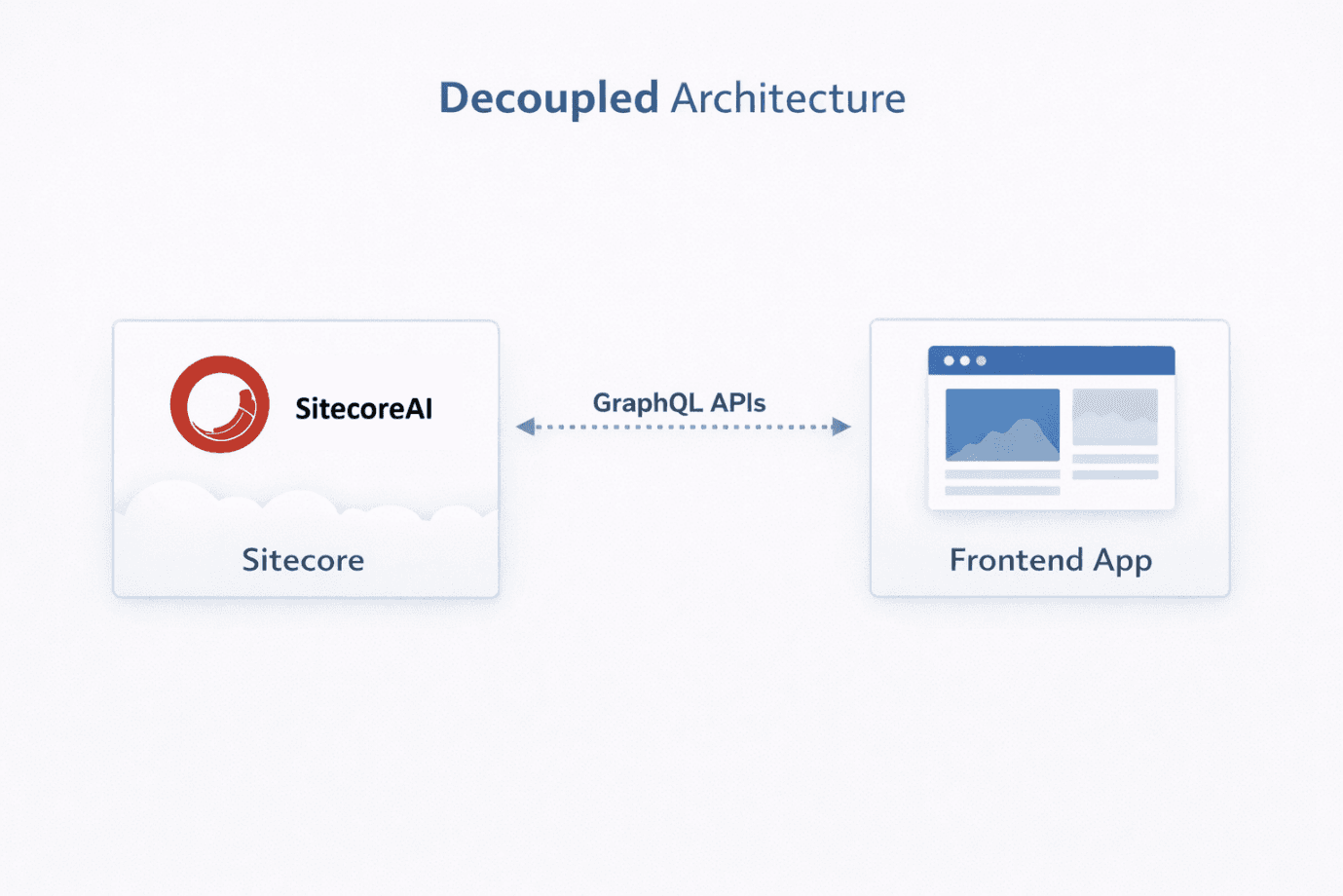
This separation allows both sides to move independently. Content teams work without worrying about UI deployments. Front-end teams ship changes without touching CMS pipelines. Coordination still exists, but it becomes intentional rather than constant.
How SitecoreAI Supports a Decoupled Approach
SitecoreAI is built with headless delivery in mind. Decoupling is not a workaround - it’s a supported pattern.
The platform provides several key capabilities that make this possible:
• GraphQL APIs for structured content access
• Layout Service for page composition
• Edge delivery for performance and caching
• Git-based serialization for managing content models
In practice, SitecoreAI defines what a page contains, while the front end decides how it should look and behave. Components still exist in Sitecore, but their rendering logic lives entirely in the front-end codebase.
This shift changes how teams think about ownership. Content structure becomes stable and predictable. Front-end development feels closer to any modern web project.
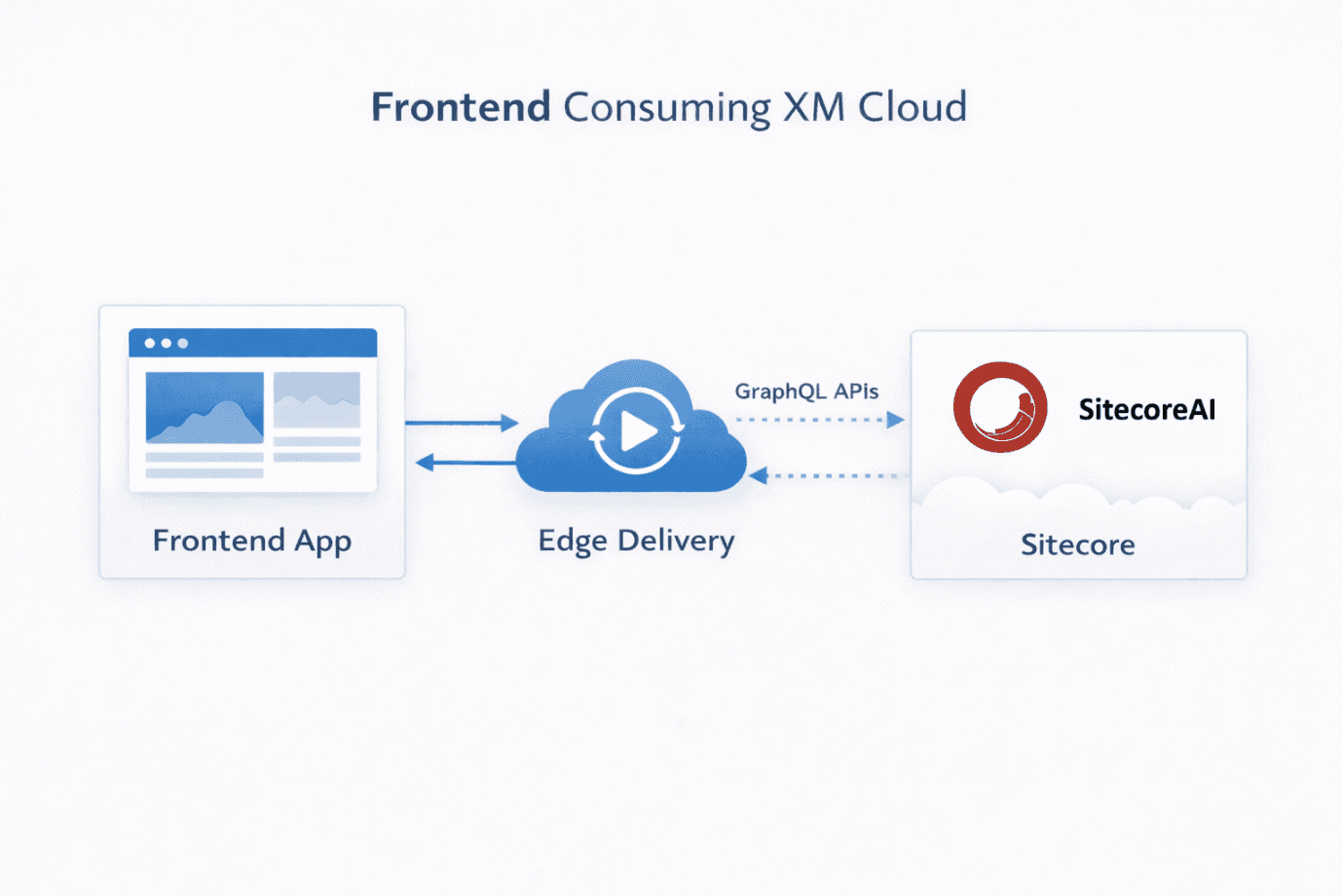
Once teams settle into this model, the boundaries become clearer - and work flows more smoothly.
Moving from Monorepository to Decoupled Without Disruption
Most teams don’t decouple overnight. The transition usually happens in steps.
The first step is deciding what belongs where. Content models, layouts, and governance stay in SitecoreAI. UI logic, styling, and performance optimizations move to the front end.
Next, the front-end application is extracted into its own repository, it consumes content through GraphQL. Environments are configured using Edge endpoints.
At this point, Field names, structures, and rendering parameters need to be treated carefully. Small changes are discussed and documented. Breaking changes become deliberate, not accidental.
Finally, pipelines are separated. SitecoreAI deployments focus on schema and content. Front-end pipelines focus on building and delivering UI changes. Releases become smaller, faster, and easier to reason about.
Conclusion & Example
Moving from a monorepository to a decoupled architecture in SitecoreAI Cloud is not a rewrite - it’s an evolution.
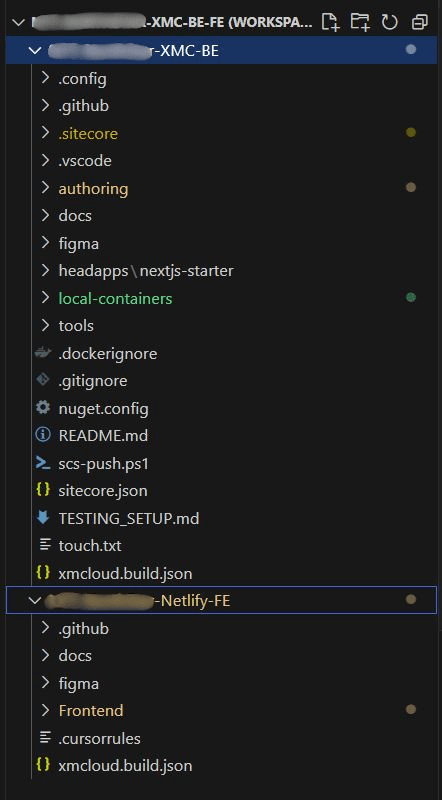
The example illustrates this shift clearly. Instead of one tightly coupled codebase, the backend (SitecoreAI) and the frontend application live in separate repositories. The backend focuses on Docker files, integrations, and content yml files, while the frontend evolves independently - optimized for performance, deployment flexibility, and modern UI practices.
This separation doesn’t remove alignment - it strengthens it. Releases become predictable. Teams deploy independently. Ownership becomes clearer.
Monorepos make sense when speed and simplicity matter most. But as projects grow, so do responsibilities. Decoupling gives teams autonomy without compromising SitecoreAI’s strengths.
If your repository structure feels heavy, slow, or overly cautious, it may not be a team problem - it may be an architectural signal.
Vikesh Bhavsar
Senior Software Engineer – SitecoreAI & SXA
Vikesh is a Sitecore professional at Addact with 4 years of experience, specializing in SitecoreAI, Sitecore XP, SXA, Headless JSS, and ASP.NET MVC. He focuses on building scalable, performance-driven CMS solutions and Sitecore Page Builder compatible components for personalized digital experiences.